

TPS Sensor, Let’s talk about one of the most influential, yet misunderstood, components under your hood: the Throttle Position Sensor, or TPS. For decades, I’ve seen this little sensor be the culprit behind some of the most frustrating engine problems. Think of it as the precise translator between your right foot and the engine’s brain. This guide will walk you through exactly how it works, why it fails, and how to diagnose it like a pro.
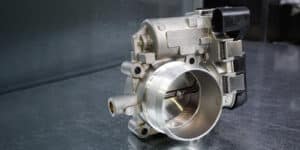
What is a Throttle Position Sensor and How Does It Work?
In simple terms, the Throttle Position Sensor is a variable resistor, much like the volume knob on an old radio. It’s mounted directly on the throttle body shaft, tracking the angle of your throttle plate. When you press the accelerator, the throttle plate opens, and the TPS sends a constantly changing voltage signal to the Engine Control Unit (ECU). This signal is the car’s way of knowing exactly how much power you’re asking for, instantly. It’s a critical communication line for fuel delivery, ignition timing, and transmission shifting.
The Clear Warning Signs of a Failing TPS Sensor
A faulty Throttle Position Sensor doesn’t just give up without a fight; it sends out clear distress signals. Ignoring these can lead to poor performance and even damage. Here are the most common symptoms I’ve encountered in the shop:
- Erratic Idling or Stalling: The engine may surge up and down at a stoplight or even stall outright because the ECU doesn’t know the throttle is closed.
- Hesitation and Stumbling During Acceleration: You press the gas, but there’s a jarring pause or stumble before the car responds. This is a classic sign of a bad signal.
- Upshifting or Downshifting Problems: In automatic transmissions, a faulty signal can confuse the transmission control module, leading to harsh, delayed, or missed shifts.
- A Sudden Surge in Fuel Consumption: An incorrect signal can trick the ECU into enriching the fuel mixture, guzzling more gas than necessary.
- The Illuminated Check Engine Light: This is almost a guarantee. The ECU is meticulous and will store codes related to the TPS circuit performance the moment it sees an implausible signal.
How to Diagnose a Faulty Throttle Position Sensor
While a professional scan tool is best for a definitive diagnosis, understanding the process is powerful. A mechanic will typically:
- Read the diagnostic trouble codes (e.g., P0120 – TPS “A” Circuit Malfunction).
- Use a multimeter to check for a smooth voltage change. The signal should sweep cleanly from about 0.5 volts at idle to 4.5+ volts at wide-open throttle without any sudden drops or spikes.
- Inspect the sensor and wiring for physical damage or corrosion.
Understanding TPS Sensor Voltage Readings
The voltage signal from the TPS is its direct language. Interpreting this voltage is the key to diagnosis. Here’s a breakdown of what you should expect from a healthy sensor.
| Throttle Position | Expected Voltage Signal | ECU Interpretation |
|---|---|---|
| Closed (Idle Position) | 0.45 – 0.90 Volts | The driver is not requesting acceleration. The ECU commands a stable idle. |
| Partially Open (Cruising) | 1.0 – 3.5 Volts (Varies smoothly) | The driver is requesting moderate power. The ECU adjusts fuel and timing for efficiency. |
| Wide-Open Throttle (WOT) | 4.0 – 4.90 Volts | The driver is requesting maximum power. The ECU enriches the fuel mixture for performance. |
Frequently Asked Questions About the TPS Sensor
What is the main function of the TPS?
The primary function of the Throttle Position Sensor is to instantly and precisely report the position of the throttle plate to the engine computer. This allows the ECU to accurately calculate the correct amount of fuel and optimal ignition timing for any given driving condition.
Can a bad TPS sensor cause my car to shake?
Yes, absolutely. If the TPS is sending an erratic or incorrect signal at idle, the ECU will constantly miscalculate the required air and fuel. This results in a rough, unstable air-fuel mixture, causing the engine to shake, stumble, or surge while stationary.
What is the relationship between the TPS and the MAF Sensor?
They are a vital team. The Mass Air Flow (MAF) Sensor measures the actual mass of air entering the engine, while the TPS tells the ECU the driver’s intent or demand. The ECU cross-references these two signals for precise engine management.
How does a TPS sensor interact with a MAP sensor?
In many vehicles, especially turbocharged ones, the Manifold Absolute Pressure (MAP) Sensor works in tandem with the TPS. The MAP sensor measures engine load based on intake manifold pressure, while the TPS indicates throttle angle. The ECU uses both to fine-tune boost control and ignition timing.
Is a TPS sensor failure a serious issue?
While you might be able to drive the car for a short time, it is not advisable. The drivability issues are significant, fuel economy suffers, and it can lead to long-term damage to your catalytic converter due to incorrect fuel mixtures. It’s a problem best addressed promptly.
Can a TPS sensor affect my transmission?
Without a doubt. In modern cars, the TPS signal is crucial for the Transmission Control Module (TCM). A faulty signal can prevent proper torque converter lockup, cause harsh shifting, and lead to delayed or incorrect gear selection.
For a broader technical overview of sensor technology in vehicles, you can explore the general page on Wikipedia.
Remember, the Throttle Position Sensor is your engine’s direct line to your intentions. Keeping it in good health ensures a responsive, efficient, and smooth driving experience. When in doubt, trust the symptoms and get it checked out.