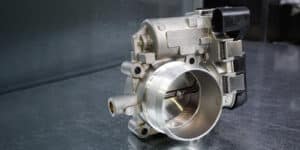


The Mass Air Flow (MAF) Sensor is a critical component of your car’s engine management system. It plays a vital role in ensuring optimal performance, fuel efficiency, and low emissions. When it fails, it can lead to a host of drivability issues. This guide will demystify the MAF sensor, explaining its function, common failure symptoms, and how to troubleshoot it, helping you keep your vehicle running smoothly.
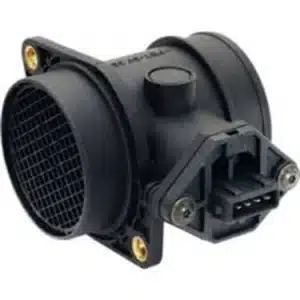
What is a Mass Air Flow (MAF) Sensor?
A Mass Air Flow (MAF) sensor is a device located between the air filter and the engine’s intake manifold. Its primary job is to measure the amount (mass) of air entering the engine. The engine control unit (ECU) uses this data, along with other sensor inputs, to calculate the correct amount of fuel needed for optimal combustion.
In simple terms, it tells the car’s computer how much air is coming in so it can add the perfect amount of fuel. This precise balance is essential for power, efficiency, and controlling emissions. For a deeper understanding of how this fits into the bigger picture of how a car works, you can read our article on What is a Car?.
How Does a MAF Sensor Work?
Most modern cars use a “hot-wire” type MAF sansor. It has an electrically heated wire or film exposed to the incoming air. The ECU applies current to keep this wire at a constant temperature. As air flows past the wire, it cools it down. The more air that flows in, the more current is needed to maintain the temperature. The ECU measures this current change, which is directly proportional to the mass of the incoming air.
7 Common Symptoms of a Bad MAF Sensor
A faulty MAF sensor sends incorrect data to the ECU, throwing off the engine’s air-fuel mixture. Here are the most common signs of trouble:
| Symptom | Description |
|---|---|
| 1. Check Engine Light | The most obvious sign. The ECU detects an implausible signal from the MAF sensor. Common trouble codes are P0101 (MAF Circuit Range/Performance) and P0102 (MAF Circuit Low Input). Learn more about trouble codes in our guide on the P0700 Code. |
| 2. Poor Engine Performance | The engine may stumble, hesitate, or jerk during acceleration, especially under load. It feels like a significant loss of power. |
| 3. Rough Idle or Stalling | An incorrect air reading can cause the engine to idle roughly, surge up and down, or even stall completely when coming to a stop. |
| 4. High Fuel Consumption | If the MAF under-reports airflow, the ECU will inject less fuel, causing a lean condition and power loss. If it over-reports, the ECU will inject too much fuel, drastically reducing your gas mileage. |
| 5. Black Smoke from Exhaust | An overly rich air-fuel mixture (too much fuel) due to a faulty MAF can cause unburned fuel to exit the exhaust as black smoke. |
| 6. Engine Misfires | Severe incorrect air/fuel ratios can lead to misfires, further damaging performance and potentially harming the catalytic converter. |
| 7. Hard Starting | Difficulty starting the engine can occur if the MAF sensor isn’t providing the correct data for the initial air-fuel mixture. |
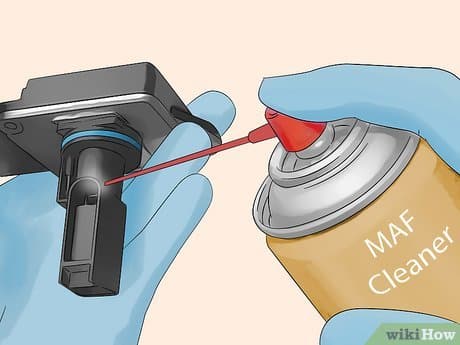
How to Clean a MAF Sensor (DIY Guide)
Often, a MAF doesn’t need replacement—it just needs a good cleaning. Dirt, oil, and debris from the air filter can coat the sensitive sensing element, causing inaccurate readings.
What You’ll Need:
- MAF Sensor Cleaner (Non-chlorinated, residue-free)
- A screwdriver (usually Phillips head)
- Latex or nitrile gloves
Step-by-Step Process:
- Safety First: Ensure the engine is cold. Disconnect the negative terminal of your car’s battery.
- Locate the Sensor: Find the MAF on the intake air duct, right after the air filter box.
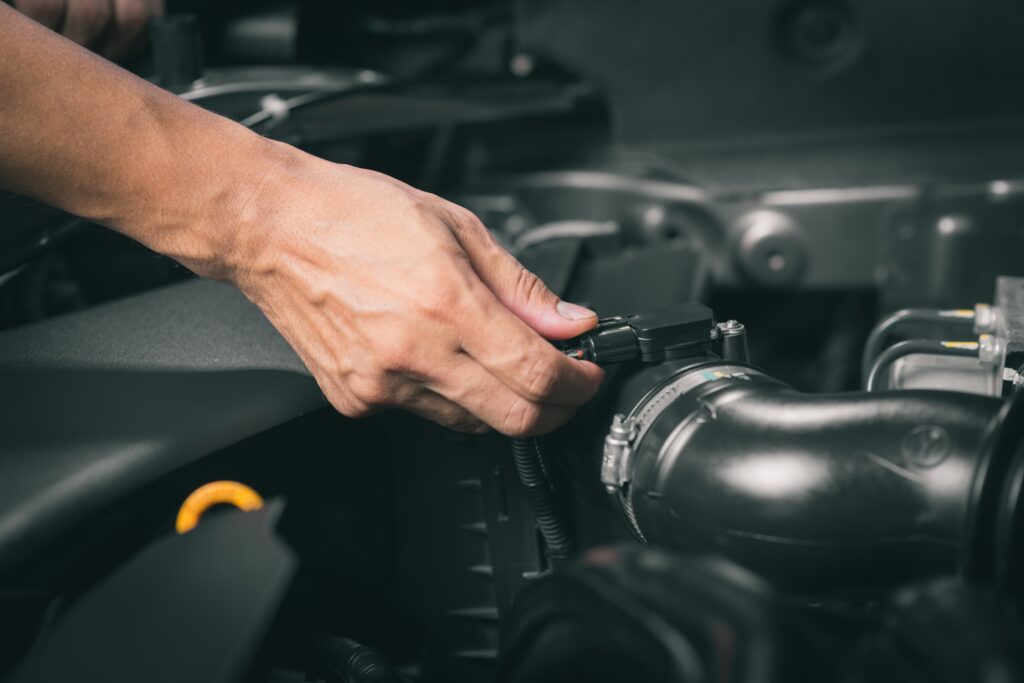
- Remove the Sensor: Unplug the electrical connector. Unscrew the clamps or screws holding it in place and carefully remove it.
- Clean the Element: Without touching the wires or the hot film inside, spray the specialized cleaner directly onto the sensing elements. Let it soak for a minute and air dry completely. Do not use compressed air or wipe it with a cloth.
- Reinstall: Once fully dry, reinstall the sensor, reconnect the electrical plug, and reconnect the battery.
MAF Sensor Replacement and Costs
If cleaning doesn’t solve the problem, replacement is necessary.
MAF Sensor Replacement Cost (2025 Estimates)
The cost varies widely based on your car’s make and model and whether you choose OEM or aftermarket parts.
| Part Type | Estimated Part Cost | Estimated Labor Cost | Total Estimated Cost |
|---|---|---|---|
| Aftermarket MAF | $50 – $150 | ||
| OEM (Original Equipment) MAF Sensor | $150 – $400+ | $50 – $150 | $100 – $550+ |
| Luxury/Performance Car OEM | $300 – $600+ | $75 – $200 | $375 – $800+ |
OEM vs. Aftermarket MAF Sensors
| Feature | OEM (Original Equipment) | Aftermarket |
|---|---|---|
| Quality & Fit | Guaranteed perfect fit and performance. | Quality can vary; some brands (Bosch, Denso) are excellent. |
| Price | More expensive. | More affordable. |
| Warranty | Usually comes with a manufacturer’s warranty. | Warranty depends on the brand and retailer. |
| Best For | Ensuring reliability and perfect integration. | Budget-conscious repairs from reputable brands. |
MAF Sensor Guide by Car Brand
Finding the right Mass Air Flow (MAF) is crucial. Here are some of the most searched models and part numbers based on our keyword data:
Nissan (Altima, Sentra, Rogue)
Common part numbers and keywords: 22680-7S000, AFH55M-12, AFH70M-38, mass air flow sensor nissan altima
BMW (3 Series E46, E90)
Common part numbers and keywords: 5WK96212, 5WK97508, 13627563147, bmw e46 Mass Air Flow (MAF), bmw mass air flow sensor
Volkswagen / Audi (GTI, Passat, A4)
Common part numbers and keywords: 06A906461, 07C906461, 06A906461B, vw maf sensor, audi a4 maf
Chevrolet / GM (Cruze, Silverado)
Common part numbers and keywords: 12677998, 25168491, GM mass air flow sensor, chevy cruze maf
Ford (F-150, Focus)
Common part numbers and keywords: BR3Z-12B579-AA, F7SF-12B579-AA, ford f150 mass air flow sensor
Toyota / Lexus (Camry, Corolla)
Common part numbers and keywords: 22204-22010, 22204-0V010, toyota mass air flow sensor
Pro Tip: Before buying a new sansor, it’s wise to know your car’s exact value, especially if you’re considering selling it. Use our guides to check What is My Used Car Worth? or its value via NADA.
Frequently Asked Questions (FAQ)
Can I drive with a bad MAF sensor?
It’s not recommended. While the car may run, it can lead to poor performance, damaged spark plugs, and a clogged catalytic converter, which is very expensive to replace.
Is a cleaned MAF sensor as good as new?
For contamination issues, yes, a proper cleaning can restore it to full function. However, if the internal component is damaged or worn out, only replacement will work.
How often should a MAF sensor be replaced?
There’s no set mileage. They typically last over 100,000 miles. Replace it when symptoms appear and other causes have been ruled out.
Are performance MAF sensors worth it?
For a standard daily driver, a high-quality OEM or OEM-equivalent sensor is best. “Performance” MAF sensors (e.g., from Jet Performance or BBK) are designed for modified engines with upgraded intakes and tuning and offer no benefit to a stock engine.
What’s the difference between a MAF and a MAP sensor?
The Mass Air Flow Sensor is a small but mighty component. Understanding its function and recognizing the signs of failure can save you from costly repairs and poor performance. Start with a simple cleaning if you experience symptoms, and if a replacement is needed, refer to our brand-specific guide to find the right part. Keeping your MAF sensor in good health is a key step in maintaining your vehicle’s efficiency and power. If you’re thinking about an upgrade, our article on What Car Should I Buy? can help you choose a model known for its reliability.